Your credentials are already out there — you just can't see them
Employee passwords leak through breaches of unrelated third-party sites and through malware on personal devices. By the time it shows up in an attack, it's months old.
Dark Web & Breach Exposure
Scan a domain against infostealer logs, breach data, and its external attack surface. You get a severity-ranked, remediation-ready PDF — which employees are compromised, what's exposed, and exactly what to reset. Not a wall of raw OSINT output.
No access to your systems. No install. No subscription.
The problem
Employee passwords leak through breaches of unrelated sites and through malware on personal devices. Session cookies get stolen and resold for a few dollars. None of it announces itself — it sits on dark-web markets and in stealer logs until someone uses it.
Employee passwords leak through breaches of unrelated third-party sites and through malware on personal devices. By the time it shows up in an attack, it's months old.
A single stealer infection dumps live session cookies and saved passwords for every site that machine touched. These sell for a few dollars and bypass MFA — and they don't show up in a password-change prompt.
If you manage 30 clients, checking each one by hand across a dozen data sources is a side project you'll never finish. There's no single dashboard showing exposure across your whole book.
The deliverable
Severity-ranked. Plain English. Ready to send.
Executive summary written for leadership, not engineers
Findings ranked by severity and recency, not alphabetically
Step-by-step remediation: forced resets, MFA, secret rotation, device cleanup
Each exposed credential tied to its breach source and date
Infostealer captures called out as active-compromise, not stale leaks
White-label option: your logo, your firm's name, on every page
The engine
Infostealer intelligence, breach data, and attack-surface recon — orchestrated into one scan and one report.
Infostealer / stealer-log intelligence — which of your employees and users have been captured by malware like RedLine, Lumma, and StealC, including live session data.
Your external footprint — subdomains, exposed services and open ports, and known CVEs on internet-facing hosts tied to your domain.
Open-source OSINT collection — emails, subdomains, and hosts gathered from dozens of keyless public sources, plus the Hudson Rock breach module.
Maps usernames and handles tied to your people across 4,000+ sites — the public identity footprint attackers use for targeting.
Every scan runs the full engine. You get infostealer, breach, and attack-surface coverage in one pass — no setup, no API keys, no babysitting a dozen OSINT tools.
How it works
Enter the domain you want to scan. To scan a domain you don't own, verify control with a one-time DNS TXT record. Roughly 2 minutes.
The scan queries breach corpora, stealer-log collections, combolists, paste sites, and leak sites for anything tied to your domain and people.
External lookups only — we never touch your network, systems, or endpoints. There's nothing to install. Most scans finish in a few minutes.
A finished, severity-ranked PDF — branded as yours with white-label — plus the findings retained in your dashboard for trend tracking on the next scan.
How it stays safe
A dark-web scan should never put your infrastructure at risk. Here's exactly what we do and don't do.
No access to your systems is required. To scan a domain you don't own, we ask for a one-time DNS TXT record to prove control — the same ownership check used by SSL and email providers. We query only external, already-leaked data; we do not probe, scan, or connect to your infrastructure.
We don't touch your network, mailboxes, files, or endpoints — there is nothing to connect and nothing to install. We surface data that is already exposed on breach and dark-web sources. We never post, re-sell, or share the exposed data we find; it is shown only to your account.
Who it's for
You manage a book of clients and need an exposure check that's repeatable, defensible, and deliverable. Add a client domain, run the same sweep across every one, and hand each client a report with your logo on it. One dashboard shows exposure across your whole book, so you can spot the stealer infection that's hitting three clients at once.
See MSP pricingYou need an outside read on your own exposure before the thing that's coming — a cyber-insurance renewal, an incident, a board review. One scan gives you a prioritized reset list and an evidence file, without a retainer or a headcount you don't have.
Scan your domainWhere this fits
A free breach checker tells you about one email. Enterprise monitoring costs five figures. Here's where darkweb-scanner sits between them.
| DarkWebScanner | Free breach checkers | Open-source / manual | Enterprise monitoring | |
|---|---|---|---|---|
| Multi-client dashboard | Build it yourself | |||
| White-labeled client PDF | Build it yourself | Varies | ||
| Infostealer-log coverage | Rarely | If you source it | ||
| Historical trend tracking | Manual | |||
| Source + date on every finding | Partial | If you wire it up | Varies | |
| Domain-wide (not single-email) scan | Email only | If you script it | ||
| Setup effort | One DNS record | None | Source data, scripting | Implementation project |
| Time to first report | Minutes | N/A | Hours per domain | Weeks |
| Cost | $99 per scan | Free | Free + your time | Annual contract |
You're paying us for the domain-wide sweep, the infostealer coverage a free checker won't give you, and a client-ready report you don't rebuild by hand.
Compliance
Monitoring for exposed credentials isn't a nice-to-have you're proposing to your client. It's a control they're already measured against.
“Establish and maintain an inventory of accounts, and monitor for accounts and credentials that have been compromised or exposed.”
“Organizations should monitor for the exposure of credentials and promptly reset any that appear in breach or dark-web data.”
“Maintain a list of compromised passwords and prevent their use; monitor for credential exposure and require resets when exposure is detected.”
“Covered entities must implement procedures to guard against, detect, and report malicious software and unauthorized access to ePHI.”
Every finding in your report maps to the control it satisfies, so the evidence goes straight into the audit file.
See the deliverable
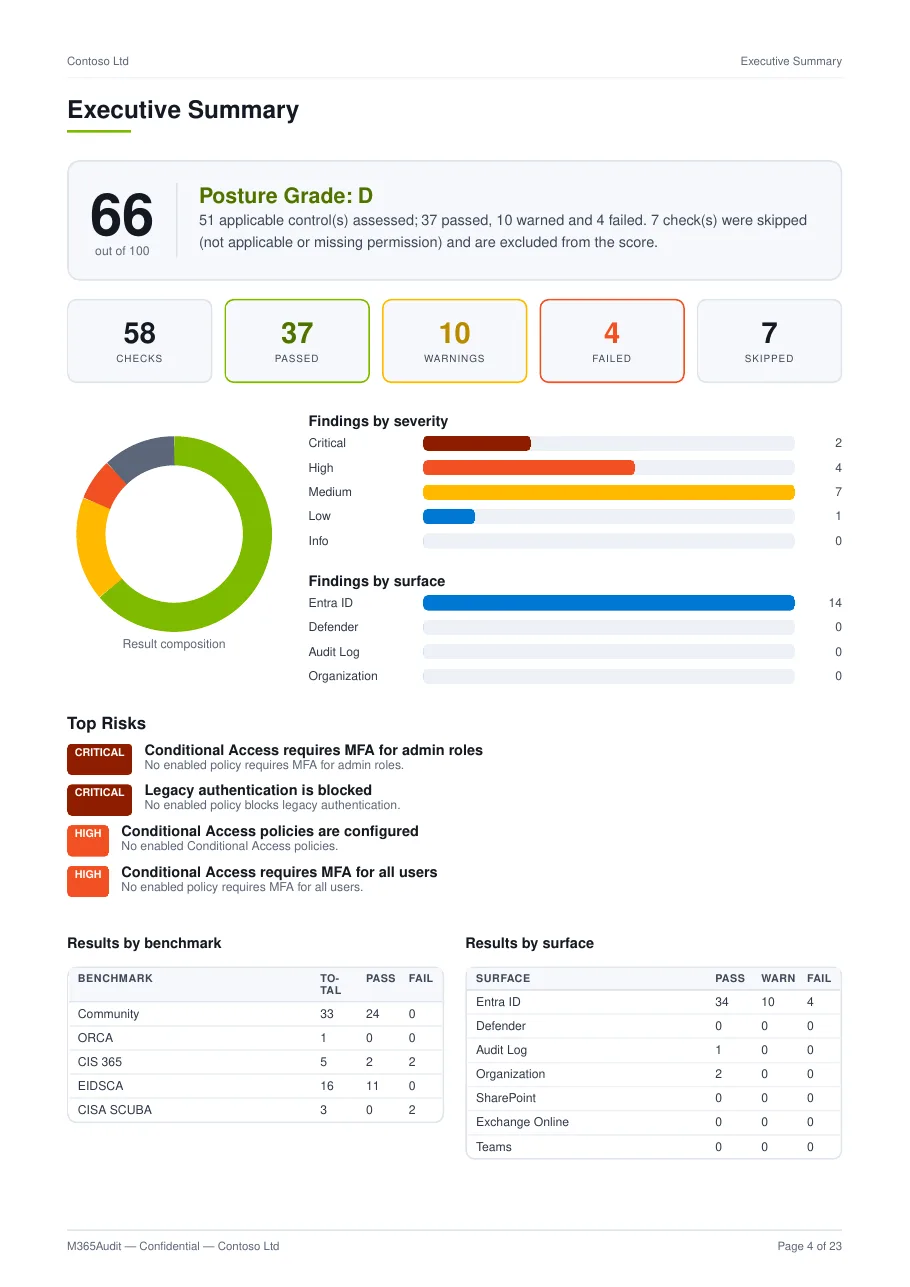
A full exposure report for a sample domain — executive summary, severity breakdown, and detailed findings with impact and remediation steps.
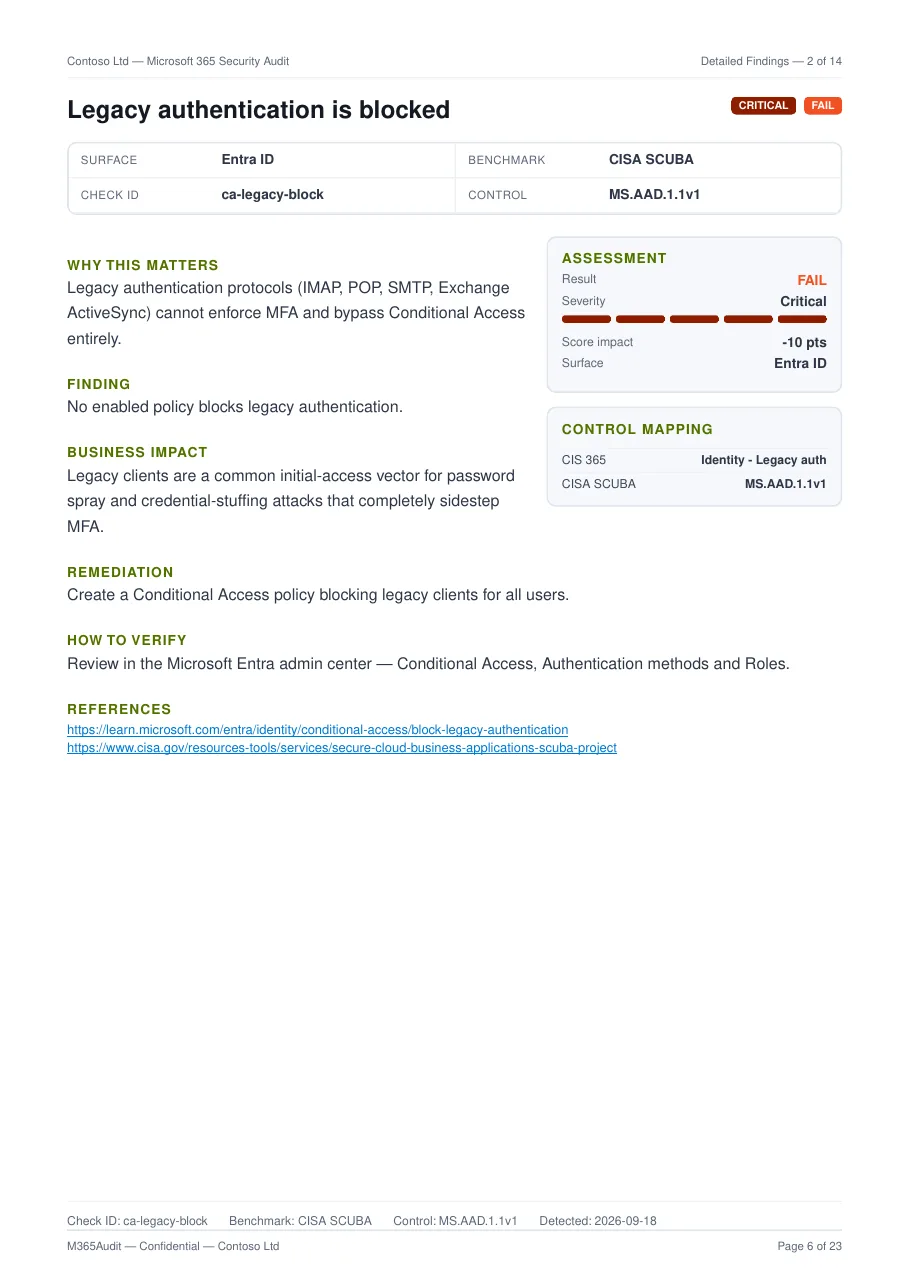
A full exposure report for a sample domain — executive summary, severity breakdown, and detailed findings with impact and remediation steps.
Pricing
One credit, one domain, the full engine, one finished report. Add white-label for $50 one-time to put your brand on every report.
1 domain scan · $99
Permanently removes darkweb-scanner branding from all your reports. Your logo, your firm name on every page. One-time purchase.
Credits never expire. No subscriptions, no commitments.
Coverage
One scan reads across credentials, infostealers, and attack surface.
Email/password pairs exposed in third-party data breaches, matched to your domain, with the breach name and date for each.
Credentials and live session cookies harvested by stealer malware (RedLine, Raccoon, Lumma, etc.). These indicate an actively compromised device.
Appearances in aggregated combolists and public/private paste sites used to seed credential-stuffing attacks.
Leaked API keys, tokens, and credentials tied to your domain found in public repos, pastes, and dumps.
Mentions of your domain or company on ransomware and data-leak sites, forums, and marketplaces.
From the blog
Practical explainers on infostealers, breaches, and exposure monitoring.
FAQ
No. We query external, already-leaked data — breach corpora, stealer logs, combolists, paste and leak sites. There's no network probing, no traffic to your endpoints, and nothing to install.
We match on your domain. To scan a domain you don't own, we ask for a one-time DNS TXT record to verify control — the same ownership check SSL and email providers use.
A breached password leaked when some third-party site you used was hacked — reset it and you're fine. A stealer log means malware is (or was) running on a device, dumping live passwords and session cookies that can bypass MFA. We flag these separately because they mean active compromise, not just a stale leak.
Findings are stored so you can trend repeat scans, and are accessible only to your account. You can delete your scan data at any time from account settings.
Most scans finish in a few minutes.
Every exposed credential and record tied to your domain across all sources, each with its breach source and date, severity-ranked, plus a full PDF report and the findings retained for trend comparison on future scans.
Yes — $50 one-time enables white-label permanently across every report on your account.
Never.
Enter a domain, run the full engine, and get a report you can send to a client the same afternoon. $99, one time.